
AICOAST / Industries / Construction / Quantity takeoff
Quantity takeoff review, confirmed by your cost engineer
We compare bills of quantities with drawings and return a review list of suspected omissions, magnitude anomalies and unit mismatches. Your licensed cost engineer confirms and signs every line; we do not stamp or issue statutory deliverables.
Where a takeoff review helps — and where it does not
Good fit
- Cost consultancies and contractor commercial teams that review a bill of quantities against a drawing set
- Teams with rework caused by omissions, unit mismatches or drawing-version confusion
- Firms that want a traceable review record rather than an opaque number
- Projects where a licensed cost engineer is named and available to confirm items
- Organisations that require files to stay inside their own environment
Not a fit
- Requests to replace a registered cost engineer or to sign, stamp or certify results
- Teams expecting a fixed accuracy rate or a guaranteed reduction in quantities
- Projects with no baseline documents and no reviewer time allocated
- Very low-quality scans with no clean drawing version available, unless a sample check proves workable
- Requests to upload confidential drawings to general public-cloud tools
Three takeoff scenarios we can scope
| Input | AI assist | Human review | Output |
|---|---|---|---|
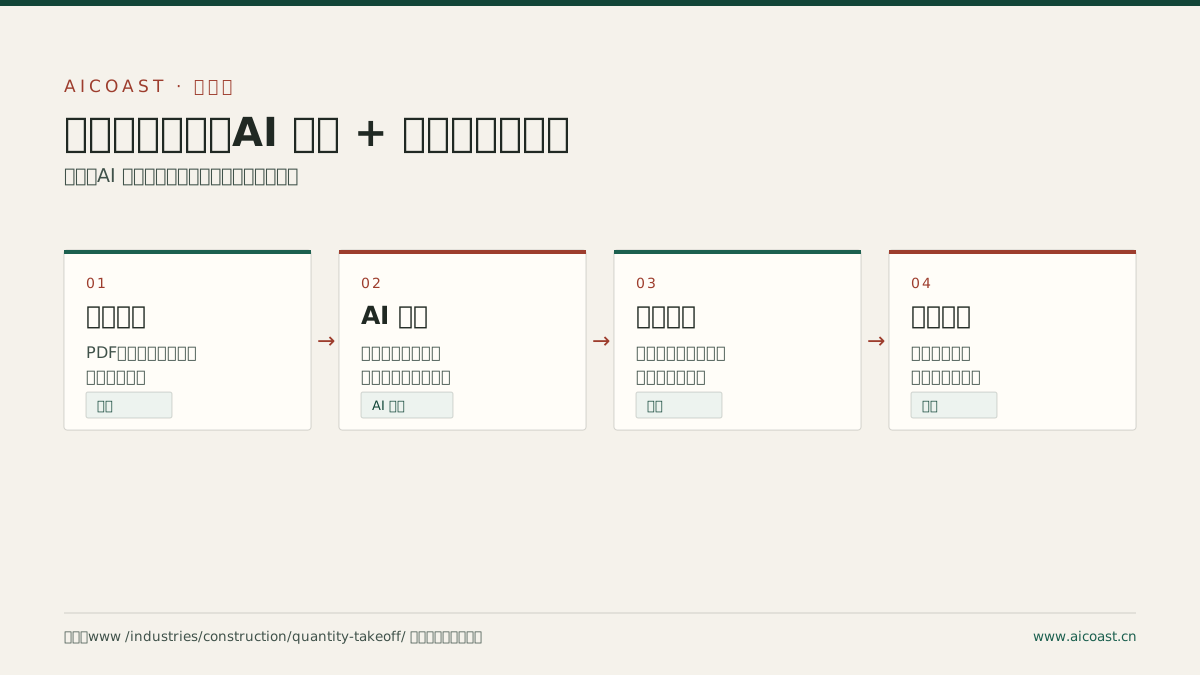
| Drawing set (PDF, electronic drawings or scans) and bill of quantities (Excel or tool export), plus your measurement rules and quota baselines | Extract BOQ lines and drawing zones; flag suspected omissions, magnitude anomalies, unit mismatches and location conflicts; record the drawing page and BOQ row for each flag | Your cost engineer confirms each item as confirm, exclude or to-check, then signs the review record | Review list (Excel), comparison sheet and signed review record |
| Historical project BOQs, settlement data and enterprise quota baselines you are authorized to share | Structure the data into a searchable indicator library by building type, structure, storeys, region and unit content; generate benchmark ranges and takeoff SOP notes | Your cost lead confirms indicator definitions, sample scope and internal-use boundaries | Indicator library, benchmark report and takeoff SOP with prompt cards |
| Comparable project cost history and a new project profile (type, area, structure, region) | Produce an internal estimate range, deviation notes and the source projects each range is based on | Your commercial reviewer adjusts and decides before it is used for any internal discussion | Internal decision-support sheet; not a quotation and not a bid recommendation |
What you receive
- Review listExcel list of suspected omissions, magnitude anomalies, unit issues and conflicts, each traced to a drawing page and BOQ row.
- Comparison sampleA side-by-side sample showing how a flag was produced, so the method can be inspected rather than trusted blindly.
- Review recordPer-item status recorded as confirm, exclude or to-check, with the confirming reviewer named.
- Acceptance sheetThe acceptance criteria agreed before kick-off, checked off item by item at delivery.
- Takeoff SOP and prompt cardsThe working method written down so your team can repeat it on the next project.
- Optional indicator libraryA searchable internal benchmark library built only from data you provide and authorise.
- Data return or deletion recordA written record of files returned or deleted at the end of the engagement.
How the pilot runs
- 01
Diagnostic 1–2 weeks
Review one drawing set and BOQ, check versions and quality, confirm the reviewer and agree acceptance measures.
- 02
Access and data setup 2–3 days
Inventory files, agree the processing environment, sign confidentiality terms and name the review chain.
- 03
Review run 2–3 weeks
Run the cross-check, produce the flag list and walk the reviewer through every item.
- 04
Acceptance and hand-over 3–5 days
Confirm coverage and traceability, record the signed review, hand over the SOP and agree whether to expand.
How acceptance is measured
- Every BOQ line is passed through the review; the coverage statement is delivered with the list
- Every flag can be traced back to a drawing page and BOQ row
- Your reviewer marks each item as confirm, exclude or to-check, and signs the review record
- The agreed acceptance sheet is completed item by item before the pilot is closed
- Process indicators are used — coverage, traceability, items closed and reviewer hours — not promised accuracy rates
- Data return or deletion is confirmed in writing
What we do not do
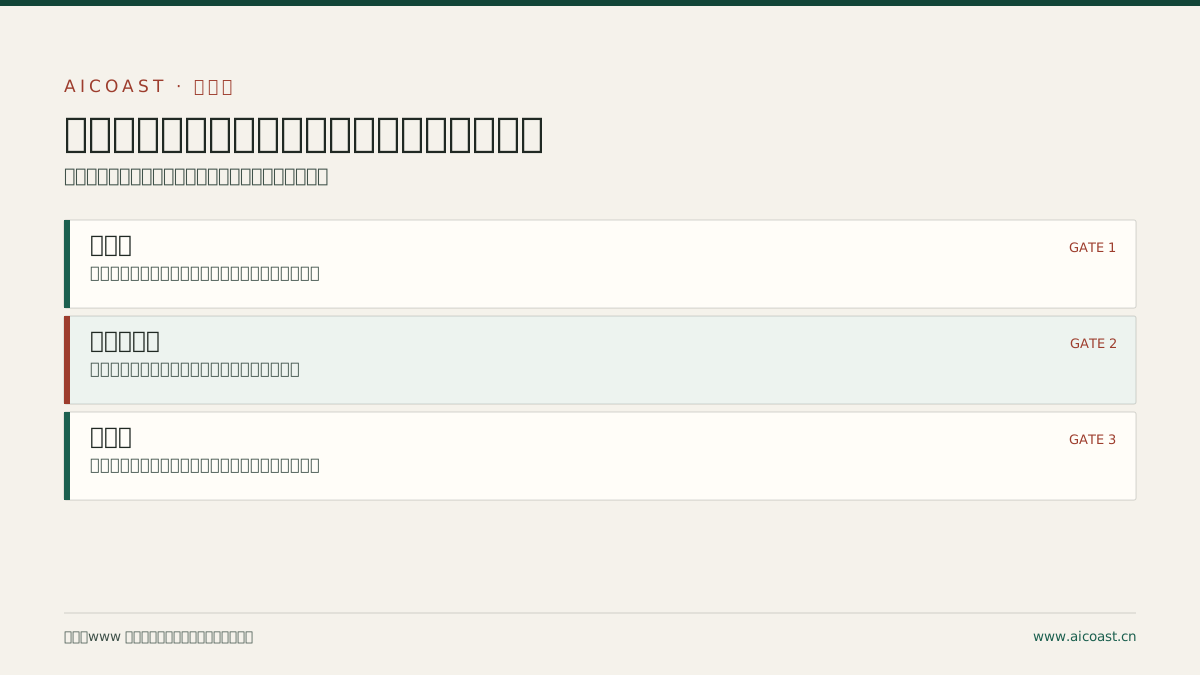
- We do not replace or act as a registered cost engineer; we do not sign, stamp or certify any result
- We do not issue statutory cost or takeoff deliverables — those are produced and signed by your qualified professionals
- We do not promise error rates, accuracy percentages, savings or audit reductions
- We do not resolve drawing-version disputes or decide which version is contractually valid
- We do not guarantee coverage of non-standard components, scanned drawings or local measurement rules in the first run
- We do not claim official interfaces or partnerships with takeoff, estimating or BIM software vendors
- We do not use client data to train models or share it across clients
Pricing approach
Priced by scope: number of drawing sets and BOQ lines, data preparation effort, review intensity and deployment shape — client intranet, dedicated environment or sanitised hosted processing. A written project confirmation carries the scope and price; no prices are published on this page. Training programs are quoted separately on our Chinese training site.
Evidence for this scenario
BOQ-to-drawing review list
A method sample built from public sample material: input, field mapping, flag format and review steps. No client data and no performance claim.
Construction takeoff client case
No client case is authorized at launch. After a pilot, an anonymized case can be published only with written client approval and a named reviewer.
Frequently asked questions
Does this replace our cost engineer?
No. It reduces the scanning and cross-checking effort before professional review. Your cost engineer confirms, corrects or rejects every flag and signs the review record; statutory responsibility stays on your side.
What do you need from us to start?
One drawing set and its BOQ in a matched version, your measurement rules or quota baseline where available, and a named reviewer with time allocated. A sample of the files is enough for a diagnostic.
Can you work with scanned drawings?
Yes, with a caveat. Scans, merged cells, handwriting and local drawing conventions raise the false-positive rate. We test a sample first and say plainly if quality is too low to be useful.
Where are the files processed?
In your intranet or a dedicated environment by default. We do not use client data to train models and do not move files between clients. At project end, files are returned or deleted with a written record.
How is success measured if you do not promise accuracy?
Through process indicators agreed before kick-off: coverage of BOQ lines, traceability of every flag, items closed by the reviewer and reviewer hours. Those are observable facts, not outcome promises.
How long does a pilot take?
Typically 2–4 weeks for a single project once files and access are ready. The exact scope and calendar are fixed in the project confirmation.
Can this become a standing capability?
Yes. After a successful pilot we can add a second project, build an internal indicator library, deploy privately and train your reviewers, with quarterly reviews as the engagement matures.